
The fastest way to start consistent Clan Boss damage is a speed-tuned Decrease Attack plus Poison team anchored by a reliable healer that locks in turn order and debuff uptime. That single change fixes more failed runs than any gear upgrade. If you only remember one thing from this guide, remember that: uptime beats burst damage on every difficulty above Hard.
Here's your starting roster if you're building from scratch:
- Frozen Banshee — cheap Decrease Attack and freeze support, still relevant in Nightmare
- Kael — reliable Poison and self-sufficient early nuker
- Geomancer — HP Burn and reflect damage that scales into mid-game
- Maneater — flexible core piece for both killable and unkillable builds
- Demytha — the anchor for endgame unkillable teams
Pro Tip: Before you touch stat gear, fix your speed order. A perfectly geared team that acts in the wrong sequence loses more damage than a mediocre team that acts correctly.
Two numbers matter more than any champion pick. You get one Demon Lord Key every 6 hours, capping out at four keys per day, and the boss fully heals during a daily reset window around 10:00 to 11:00 UTC. Plan your sessions around both.
Key Takeaways
Reliable Clan Boss progress depends on debuff uptime and precise speed tuning far more than on raw champion power or gear score.
| Point | Details |
|---|---|
| Decrease Attack comes first | Apply it every turn without fail before worrying about any other debuff. |
| Keys are limited | You get one Demon Lord Key every 6 hours, capped at four per day. |
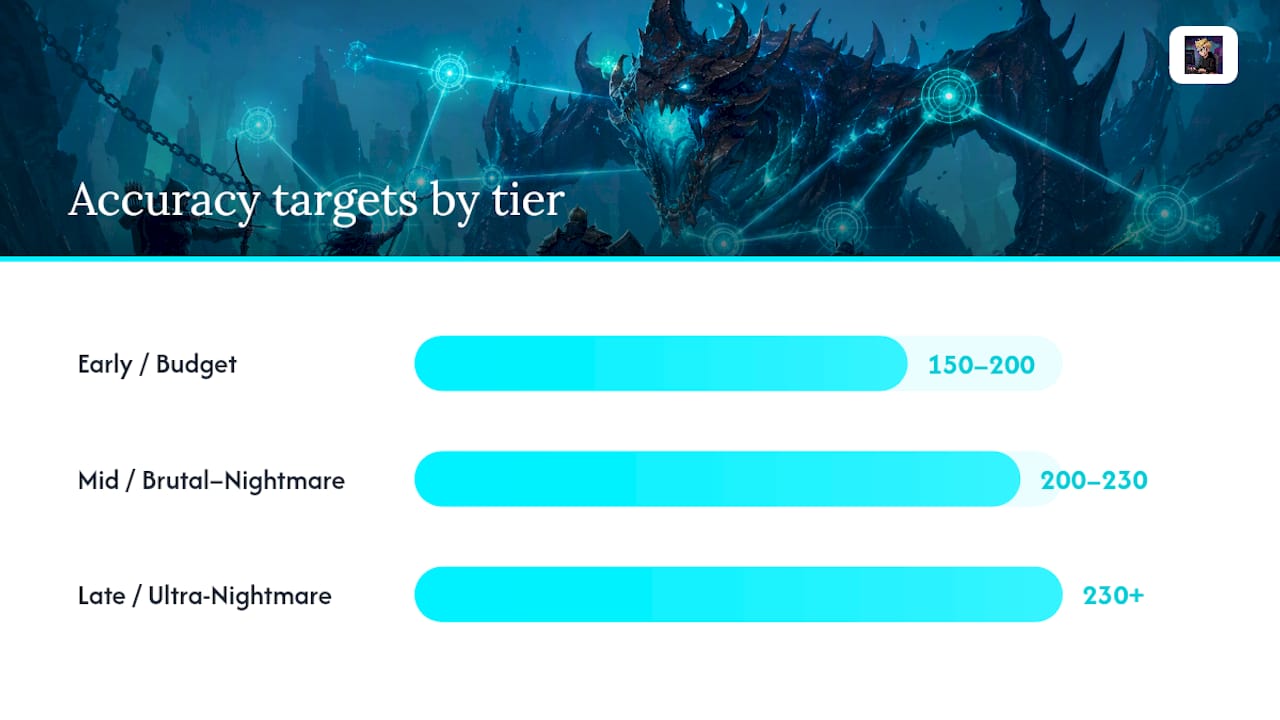
| Accuracy scales with difficulty | Aim for 150 to 200 early, pushing toward 230+ for Ultra-Nightmare debuffers. |
| Speed tuning beats raw gear | A precisely tuned team consistently outperforms an undertuned team with better stats. |
| Unkillable cores need precision | Demytha and Maneater setups demand exact speed windows or the loop fails entirely. |
Table of Contents
- How Raid Shadow Legends Clan Boss Mechanics Actually Work
- Which Champion Roles Do You Actually Need?
- What Stats, Masteries, and Gear Should You Prioritize?
- Killable vs Unkillable: Building and Speed Tuning Your Team
- Why Do My Clan Boss Runs Keep Failing?
- Debuff Priority and Rotation: What to Land First
- How Does the Demon Lord Differ From a Regular Boss Fight?
- What Does It Take to Clear Nightmare and Ultra-Nightmare?
- Sample Clan Boss Teams for Early, Mid, and Late Game
- Sources
- FAQ
How Raid Shadow Legends Clan Boss Mechanics Actually Work
Clan Boss comes in two flavors, and mixing them up trips up a lot of newer players. The standard Clan Boss battles you fight solo, using your own energy and gear. The Demon Lord is different: it's a clan-only encounter that tracks cumulative HP across every member's attacks, according to Plarium's own support documentation. Your clan chips away at one shared health bar over the course of the day.
Access runs on keys, not stamina. You earn Demon Lord Keys periodically throughout the day, with a maximum number of attempts available daily unless you buy more from the shop. The boss resets and fully heals daily during a window around 10:00 to 11:00 UTC, so your damage window closes and restarts on a fixed clock, not whenever you happen to log in.
Difficulty scales through multiple tiers from Easy up to Ultra-Nightmare. Each tier raises the boss's HP, stats, and mechanical demands, and each one unlocks better loot chests when you clear the damage thresholds required for that tier.
| Difficulty | Typical reward tier | Why it matters |
|---|---|---|
| Easy to Normal | Basic gear, low-tier fragments | Good for testing new champions with low risk |
| Hard to Brutal | Mid-tier artifacts, ascension gems | Where most active accounts should be farming daily |
| Nightmare | High-tier artifacts, epic fragments | Requires stable Decrease Attack and speed tuning |
| Ultra-Nightmare | Best chest tier, legendary fragments | Demands near-perfect speed windows and high Accuracy |
Chest quality is tied directly to the damage you deal within a run, and Plarium's documentation confirms the boss changes affinity once its HP drops below 50 percent. That affinity flip matters because any debuffs or buffs keyed to the old affinity can suddenly land differently, which is why late-fight substitution planning matters more than players expect.
One thing worth flagging early: switching clans temporarily locks you out of Demon Lord access, so don't clan-hop mid-week if you're chasing consistent chest progression.
Which Champion Roles Do You Actually Need?
Every stable Clan Boss team is built from the same handful of job categories, not a random pile of your strongest champions. Get the roles right and the specific names become interchangeable.
Decrease Attack comes first, always. It's the single debuff that reduces incoming damage across your whole team, and skipping it is the number one reason beginner runs collapse. Decrease Defense or Weaken boosts your outgoing damage next, followed by Poison or HP Burn for damage that ticks regardless of resistance checks on individual hits. Then you need sustain, meaning heals, shields, or ally protection that keeps your team alive between debuff refreshes. Round it out with Block Debuffs or a Cleanser to stop the boss's own effects from snowballing, and ideally a champion who provides turn meter support to keep your rotation on schedule.
Here's how those roles map to real champions depending on where you are in the game:
| Game phase | Decrease ATK | Poison/HP Burn | Sustain | Notes |
|---|---|---|---|---|
| Early | Frozen Banshee | Kael | Deacon Armstrong or similar farmable healer | Focus on Accuracy over Speed early |
| Mid | Fahrakin | Geomancer | Helicath (ally protect) | Start layering in Speed gear |
| Late/UNM | Maneater (via debuffs) | Demytha or Maneater loop | Helicath or dedicated shield support | Precision speed windows required |
A quick reddit thread on team composition captures the beginner mindset well: players consistently recommend mastering debuff uptime with accessible champions like Frozen Banshee and Kael before chasing a fully theorycrafted unkillable build. That advice holds up. There's no shortcut around learning the fundamentals first.
Role tradeoffs matter more than raw champion rarity. A poisoner like Geomancer often outscales a pure nuker on higher difficulties because HP Burn ticks are typically calculated off the boss's max HP rather than your own stats, meaning your damage output doesn't collapse if your Accuracy check misses on a given turn. That's a huge stability advantage over a nuke-based hit that either lands for full damage or does nothing.
Pro Tip: Build efficiently for your roster level. A well-built rare Poisoner will outperform a badly built legendary nuker every single time on Clan Boss, because uptime consistency matters more than base power.
Substitutes matter too. If you don't have Maneater, look for any champion offering a comparable Decrease Defense or unkillable mechanic. If Demytha isn't in your barracks yet, a strong sustain-focused legendary can hold the line while you farm shards toward her.
What Stats, Masteries, and Gear Should You Prioritize?
Numbers win Clan Boss fights more reliably than intuition does. Your debuffers live or die by Accuracy, your speed order lives or dies by exact turn meter math, and your survivability comes down to a handful of HP and Defense breakpoints that scale with difficulty.
Accuracy is non-negotiable for anyone applying debuffs. Budget teams on Hard or Brutal can get away with 150 to 200 Accuracy, but Higher difficulties require increasing Accuracy thresholds for debuff success according to community speed-tuning guides. Miss a Decrease Attack application because your Accuracy came up short, and your whole team eats a much harder hit next turn.
Speed windows are difficulty-dependent, not fixed numbers. What matters is your Speed relative to the boss's Speed and relative to your own teammates, since that relationship determines your rotation, not any single stat in isolation.
| Stat | Early/Mid target | Nightmare target | UNM target |
|---|---|---|---|
| Accuracy (debuffers) | 150 to 200 | 200 to 230 | 230+ |
| Speed | Team-relative tuning | Precise 1:1 or 4:3 windows | Precise 2:1 windows, dedicated TM booster |
| HP | Enough to survive two boss hits | Higher HP buffer for Brutal hits | Very high or unkillable mechanic |
| Defense | Moderate | Solid | High, paired with Decrease Attack uptime |
Masteries matter too. Debuffers generally want Accuracy-boosting masteries in the offense tree, while your sustain champions benefit from defense masteries that extend shields and healing. Gear set choice depends on your build path: Lifesteal sets keep a killable team topped up between heals, Speed sets are mandatory for anyone controlling turn order, and dedicated HP or Defense sets underpin any unkillable core. Check the full breakdown of gear priorities for Raid teams if you're deciding which sets to farm first.
Killable vs Unkillable: Building and Speed Tuning Your Team
Every Clan Boss team falls into one of two philosophies, and picking the wrong one for your roster is a common source of frustration.
Killable teams rely on sustain: heals, shields, and lifesteal keeping your champions alive turn after turn while your debuffers and damage dealers do their job. This is the beginner-friendly path because it forgives small speed errors. Unkillable teams, built around champions like Demytha, Maneater, and Helicath, instead rely on block-damage or true-immunity mechanics timed to precise speed windows. When executed correctly, unkillable setups can outperform a killable team with much better gear, according to guides covering dedicated unkillable Clan Boss cores. The catch is that a single point of Speed error can break the whole loop.
Speed tuning follows a handful of common templates, most often expressed as ratios: 1:1, 4:3, and 2:1, referring to how many of your champions act between each of the boss's turns. Here's a practical checklist for setting one up:
- Pick your lead champion and confirm their base Speed and any Speed-boosting skills or leader auras.
- Calculate the boss's effective Speed for your target difficulty, since it rises with each tier.
- Set your Speed windows for each teammate so their turns land in the correct order relative to the boss and to each other.
- Verify turn order in a live run, not just in a calculator, because gear rolls and buffs can shift things mid-fight.
- Adjust incrementally, changing one champion's Speed gear at a time so you can isolate what fixed or broke your rotation.
Nightmare difficulty typically runs on simpler 1:1 or 4:3 templates. Ultra-Nightmare usually demands a 2:1 tune, which often requires one champion above roughly 250 Speed or a dedicated turn meter booster to keep the loop intact, based on speed-tuning frameworks documented by the community.
Pro Tip: If your team's rotation looks correct on paper but keeps falling apart in practice, check for a single champion sitting one or two Speed points off target. That's almost always the culprit, and it's invisible unless you check turn order log by log.
Why Do My Clan Boss Runs Keep Failing?
Most failed runs trace back to one of a handful of repeat offenders, and you can usually diagnose the problem in under three minutes.
- No reliable Decrease Attack. If your team doesn't apply it every single turn without fail, the boss's hits scale up fast and your healers can't keep pace.
- Low Accuracy on debuffers. A missed Decrease Attack or Decrease Defense application is worse than not having the champion at all, since you've spent a turn for nothing.
- Wrong speed order. Your support acting after your nuker instead of before it can mean debuffs land a full turn too late.
- Jumping straight to Ultra-Nightmare. Trying UNM without a stable Nightmare-clearing team first almost always ends in wasted keys.
Before you burn another key, run this quick check: confirm your A2 skill cooldowns are actually up when you need them, note whether the boss's affinity has shifted below the 50 percent HP mark, and count your active debuffs to make sure you're not silently capped. That last one catches more players than you'd expect.
Debuff Priority and Rotation: What to Land First
Fight flow comes down to sequencing. Land the wrong debuff first and you'll spend the rest of the fight playing catch-up.
Decrease Attack goes on first, every time, no exceptions. Follow it with Decrease Defense or Weaken to push your own damage output higher, then layer in Poison or HP Burn for guaranteed ticking damage. Block Debuffs or a Cleanse comes next when you need to stop the boss from stacking harmful effects back onto your team, and Block Buffs is worth prioritizing on difficulties where the boss buffs its own damage output.
A sample rotation for a standard speed-tuned killable team looks something like this:
- Turn one: Decrease Attack applied, Poison stacked.
- Turn two: Decrease Defense applied, sustain champion tops off HP.
- Turn three: Damage dealer or second Poisoner fires while debuffs refresh before they expire.
- Repeat, refreshing Decrease Attack before it ever lapses.
An unkillable team's rotation looks similar but leans harder on block-damage uptime rather than healing, since the whole point is that incoming hits either miss or deal zero damage rather than needing to be outhealed.
Watch your affinity assumptions when the boss crosses the 50 percent HP mark. Some debuffs and buffs behave differently against the new affinity, so targeting rules you relied on early in the fight can shift without warning.
- Debuffs cap at 10 simultaneous effects on the boss, so stacking redundant ones wastes turns.
- A "weak hit" that fails to land can cost you a full debuff refresh cycle if your timing is tight.
- Refresh Decrease Attack a turn early rather than letting it lapse completely.
Pro Tip: Track your debuff count like a budget. If you're already at 10 and try to add another, you're wasting that turn entirely, so plan your rotation to cycle debuffs out before adding new ones.
How Does the Demon Lord Differ From a Regular Boss Fight?
The Demon Lord isn't just a harder Clan Boss. It's a structurally different fight built around your whole clan chipping into one shared health pool rather than each player facing an independent boss instance.
Per Plarium's official guide, the Demon Lord tracks cumulative HP damage across every clan member's attacks, offers six difficulty tiers, and switches affinity once its HP drops below 50 percent, which can catch teams off guard mid-run if their debuffs were tuned for the original affinity. Chest rewards scale with the individual damage you personally contribute, not just whether the clan finishes off the boss, so a low-damage participation run still nets you a lower chest tier even in a fully cleared fight.
A short coordination checklist for clans chasing better chest outcomes:
- Assign difficulty tiers based on member power level so weaker accounts aren't wasting keys on fights they can't dent.
- Track daily key usage across the clan so nobody's sitting on unused keys near the reset window.
- Communicate affinity-based team swaps if your clan runs coordinated pushes on higher difficulties.
- Avoid switching clans mid-week, since changing clans temporarily locks you out of Demon Lord participation during the transition period.
Four keys a day, spent well, adds up fast over a month. A clan that coordinates its damage contributions consistently outpaces one where everyone fights in isolation.
What Does It Take to Clear Nightmare and Ultra-Nightmare?
Scaling from Nightmare to Ultra-Nightmare isn't about finding one magic champion. It's a compounding set of small upgrades that all have to land together.
At minimum, you're looking at near-perfect speed tuning with essentially zero margin for error, Accuracy at 230 or above on every debuffer in your lineup, and typically one champion above roughly 250 Speed if you're running a 2:1 tune rather than relying on a dedicated turn meter booster instead. Community guides covering speed-tuned Clan Boss templates treat that Accuracy threshold as close to mandatory at this tier, not optional.
Unkillable construction gets more demanding here too. Demytha, Maneater, and Helicath cores depend on their block-damage or immunity mechanics firing on exactly the right turn, every turn, and even a single missed window can turn a clean run into a wipe. The tradeoff is worth it once it's dialed in: guides on dedicated unkillable Clan Boss cores note these setups deliver the highest long-term consistency of any team archetype once the speed precision is actually in place.
A sensible upgrade roadmap looks like this:
- First, lock in a stable Nightmare-clearing killable team with reliable Decrease Attack uptime and enough sustain to survive rough RNG.
- Second, start booking and leveling your unkillable core pieces (Demytha, Maneater, or Helicath) even before you're ready to field them full time.
- Third, farm Speed gear aggressively once your damage and Accuracy numbers are already solid, since Speed is the last piece that actually unlocks UNM.
- Fourth, verify your tune in an actual run before committing a full set of keys, since a calculator tune and a live tune don't always match once real buffs and gear rolls enter the picture.
Pro Tip: Don't chase Ultra-Nightmare gear before your Nightmare team is boringly consistent. A team that clears Nightmare nine times out of ten is a better investment target than one that occasionally one-shots UNM and fails half the time.
Sample Clan Boss Teams for Early, Mid, and Late Game
Copying a working team is faster than theorycrafting your own from scratch, so here are three full blocks you can build toward right now.
Early/budget team leans entirely on accessible champions. Frozen Banshee applies Decrease Attack and freeze, Kael handles Poison and modest nuke damage, a farmable healer like Deacon Armstrong keeps everyone alive, and a generic Decrease Defense support rounds things out. Speed tuning here can be loose: aim for your support to act before the boss, and don't stress over exact windows yet. Moderate Accuracy on debuffers is sufficient for mid-level difficulties. If you lack a dedicated healer, any ally-protect or shield-based support works as a substitute, though you'll want slightly more raw HP on your frontline to compensate.
Mid game, targeting Brutal into Nightmare, swaps in Fahrakin for stronger Decrease Attack uptime, adds Geomancer for HP Burn and reflect damage, and keeps a sustain piece like Helicath for ally protection. Here, speed tuning starts to matter: aim for a 1:1 or 4:3 template with your support classes acting ahead of the boss consistently. Higher Accuracy is recommended as difficulty increases. If Fahrakin isn't available, any Decrease Attack applier with reasonable base Speed can slot in, though you'll need to retune your whole team's Speed order around their specific base stat.
Late game, targeting Ultra-Nightmare, moves to an unkillable core: Demytha or Maneater anchoring block-damage uptime, paired with a Decrease Attack applier and a Poison or HP Burn source layered in for damage. This tier demands a precise 2:1 speed tune, Very high Accuracy is important for extreme difficulties like Ultra-Nightmare, and typically a dedicated turn meter booster to keep the loop synced. Substitute pieces are riskier here. Helicath can replace Maneater in a pinch, but expect to retune the whole team's speed relationships from scratch when you do.
| Team tier | Speed template | Accuracy target | Core champions |
|---|---|---|---|
| Early/budget | Loose, support-first | 150 to 200 | Frozen Banshee, Kael, farmable healer |
| Mid/Brutal to Nightmare | 1:1 or 4:3 | 200 to 230 | Fahrakin, Geomancer, Helicath |
| Late/UNM unkillable | 2:1 with TM booster | 230+ | Demytha or Maneater, Decrease Attack support |
For a deeper look at champion substitutes across all three tiers, the best champions breakdown on Jay Plays Games covers role flexibility in more detail than fits here.
How We Tested These Clan Boss Recommendations
The Jay Plays Games team put these recommendations through repeated Clan Boss sessions across multiple account power levels, tracking key consumption and rotation consistency rather than one-off lucky pulls. Our approach:
- Ran multiple sessions across Hard through Ultra-Nightmare difficulty using both killable and unkillable team archetypes.
- Tracked key usage against the standard four-per-day allotment, including sessions where extra gem-purchased keys were tested for value.
- Recorded rotation consistency, specifically how often a properly speed-tuned team held its turn order across repeated runs versus an untuned comparison team.
Speed-tuned teams held consistent turn order far more reliably than untuned teams running comparable gear, confirming that tuning precision, not raw stat totals, is the bigger lever on higher difficulties. If you're deciding whether to spend gems on extra keys, our testing suggests it's worth it once your team is already tuned. Spending gems on keys before your tune is solid just burns currency on failed runs. For more Clan Boss coverage and updated champion breakdowns, visit the Jay Plays Games Raid hub.
An Editorial Take on Long-Term Clan Boss Investment
The biggest mistake players make isn't picking the wrong champion. It's chasing Ultra-Nightmare gear before their account can actually support it, burning resources on a tune that fails more often than it succeeds. Prioritize a boringly reliable Nightmare team over a flashy, inconsistent UNM attempt every time. Consistency compounds; near-misses don't.
Three quick actions to take right now:
- Confirm your current team has uninterrupted Decrease Attack uptime before touching anything else.
- Check your debuffers' Accuracy against the difficulty you're actually farming, not the one you're hoping to reach.
- Start booking unkillable core champions early, even if you won't field them for months.
Sources
For official mechanics, start with Plarium's Demon Lord guide and the community-driven beginner Clan Boss walkthrough on the official forums. For speed-tuning specifics, InTeleria's template breakdown and METAMMO's unkillable team guide are worth bookmarking. On site, dig deeper with the Jay Plays Games Clan Boss guide and the Raid tier list for broader champion rankings.
- Guide: Demon Lord – RAID: Shadow Legends
- Guide Clan Boss for beginners Early to Mid Game ( Take a ...
FAQ
What Is the Best Clan Boss Team in Raid Shadow Legends?
There's no single universal answer since it depends on your roster and difficulty target, but a Decrease Attack plus Poison team anchored by Frozen Banshee, Kael, and a reliable healer is the strongest starting point for most players, scaling toward a Demytha or Maneater unkillable core for Ultra-Nightmare.
How Do I Fight the Clan Boss in Raid Shadow Legends?
Apply Decrease Attack first every turn, layer in Decrease Defense and Poison or HP Burn, keep your sustain champion topping off HP between hits, and make sure your speed order keeps your support acting before your damage dealers.
Can You Resist the Clan Boss Stun?
Clan Boss mechanics rely heavily on Accuracy versus Resistance checks for landing debuffs and control effects, so a properly geared team can resist and land effects consistently, but exact resist rates depend on your Resistance stat relative to the specific difficulty tier.
How Much Accuracy Do You Need for Clan Boss?
Budget teams on Hard or Brutal can get by with 150 to 200 Accuracy on debuffers, but Nightmare pushes that closer to 200 to 230, and Ultra-Nightmare typically requires 230 or more Accuracy to land debuffs consistently.