
Honkai: Star Rail earns a Recommended verdict, and it's an easy yes for turn-based strategy fans and anyone who wants a gacha RPG with an actual story worth following. Combat rewards real tactical thinking instead of raw stats, the writing is sharper than most free-to-play games bother with, and you can make solid progress without spending a dollar. The catch is the same one every gacha title carries: pulling for the character you want takes patience, or cash.
TL;DR:
- Combat's core mechanic of exploiting enemy weaknesses through Paths and Elements creates engaging puzzles, with team composition and turn order becoming crucial at higher difficulties.
- Gacha pulls are more predictable thanks to a guaranteed five-star within 90 pulls and a soft pity system, but character building and resource management remain key to progress.
- Focus on ascending your main damage dealer early and build one Relic set before diversifying, as a well-equipped four-star can outperform a poorly built five-star.
- The game's story and character development invest players early, and side content such as quests and lore deepen the overall experience despite pacing dips in mid-chapters.
- Performance is stable across platforms, with mobile and PC offering different but equally smooth experiences, while ongoing content and regular patches encourage long-term engagement.
Table of Contents
- Honkai Star Rail Combat Review: Is the Turn-Based System Any Good?
- Story and Character Writing: Does It Hold Up?
- How Progression and the Gacha System Actually Work
- Visuals, Sound, and the Overall Presentation
- How Much Content Is There, and Does It Hold Up Over Time?
- Where and How Well Does Star Rail Run?
- Who Should Actually Play This Game?
- Testing Notes From Our Time With the Game
- Final Verdict: Score and Three Takeaways
- The Take From Jayplaysgames
- Sources
- FAQ
Honkai Star Rail Combat Review: Is the Turn-Based System Any Good?
Star Rail's combat is the strongest argument for playing it, and it's built around two overlapping systems: Paths and Elements. Paths work like classes. Destruction characters hit hard, Nihility characters apply debuffs, Harmony characters buff the team, and so on. Elements (Physical, Fire, Ice, Lightning, Wind, Quantum, Imaginary) determine what enemies are weak to, and exploiting that weakness fills a "Toughness" bar that, once broken, staggers the enemy and delays their next turn.
That break mechanic is the real hook. It turns every fight into a small puzzle: figure out the enemy's weakness, sequence your skills to exploit it, and use your Ultimate at the right moment rather than the first moment it's available. Community discussions on the Path and Element interplay point out that this system creates a genuine long-term value loop, since older characters stay useful as long as their kit counters something new.
The basic turn loop is simple to learn but has real depth underneath:
- Basic Attack: generates energy, usually the weakest option but free to use every turn.
- Skill: costs Skill Points, does the heavy lifting in most kits.
- Ultimate: charges from dealing and taking damage, often the biggest swing in a fight.
- Traces and Relics: passive upgrades and gear that shape how a character's kit scales over time.
Pacing holds up well across a full session. Fights against trash enemies clear fast, especially once you unlock auto-battle, and the game lets you crank battle speed so grinding doesn't eat your evening. IGN's review called the progression systems polished, and that shows most clearly in how little friction there is between "I want to fight" and "I'm fighting."
The learning curve is gentle at first, then spikes once you hit harder content like Simulated Universe's higher difficulties, where team composition and turn order actually matter.
Pro Tip: Don't build every character you pull. Pick four or five you actually enjoy playing and pour your resources into them. Spreading Relics and Light Cones thin across a big roster is the single biggest reason new players feel stuck.
Story and Character Writing: Does It Hold Up?
The prologue does something a lot of gacha games skip: it makes you care before it asks anything of you. You wake up as a nameless drifter caught in a cosmic mess, get roped into the Astral Express crew, and within a couple of hours you're already invested in getting home. IGN praised the strength of that opening, and it sets a tone the rest of the game mostly earns.
Character writing is where Star Rail separates itself from a lot of competitors in the genre. March 7th brings goofy optimism that could've been grating but lands as genuinely likable. Dan Heng's quiet, guarded backstory gives the crew some real emotional weight once it unfolds. Polygon's review described the whole game as a "goofy but well-oiled space adventure," and that phrase nails the tone: light and comedic on the surface, with heavier arcs threaded underneath for players who stick around.
That tonal mix fits the game's ambition. It's not trying to be a grim epic, and it's not empty fan service either. It sits comfortably in between.
Side content pulls its weight too:
- Companion quests flesh out characters the main story only sketches.
- World lore drops (item descriptions, terminal logs) reward players who actually read.
- Recurring NPCs across planets give the setting a sense of continuity most gacha games skip.
The main criticism is pacing dips in the middle chapters, where exposition slows the momentum the prologue built. It picks back up, but expect a lull.
How Progression and the Gacha System Actually Work
Star Rail runs on four core progression systems: Light Cones (weapon equivalents that boost stats and grant passive effects), Relics (gear pieces that build toward set bonuses), Traces (a skill tree unlocked with materials and XP), and Eidolons (character-specific upgrades pulled from gacha duplicates). None of them are optional window dressing. A well-built four-star character with the right Relic set will often outperform a poorly built five-star.
The gacha, called the Warp system, uses Stellar Jade as currency and guarantees a five-star character or Light Cone within 90 pulls thanks to a hard pity system. Miss a featured five-star on your first attempt and the next one is guaranteed, which softens the sting compared to gacha systems with no pity floor at all. GamesRadar's review called out this kind of tactical, generous free-to-play design as one of the game's strengths, while still flagging monetization as a real cost concern for players who chase every banner.
Here's where to actually focus your resources early on:
- Ascend your main damage dealer first since raw level caps gate almost everything else.
- Build one full Relic set before spreading gear across your roster.
- Save Stellar Jade for banners featuring characters you'll actually use, not just anything shiny.
- Spend Trailblaze Power on daily materials before burning it on side content.
For spending advice: a monthly pass or Battle Pass purchase is the best value if you're going to spend anything at all, since both return usable long-term resources. Skip impulse-buying single-character banners unless that character solves a real gap in your team. Multiple reviews note the game's generosity compared to genre norms, but that generosity doesn't erase the pull toward spending during limited banners.
Pro Tip: Treat Stellar Jade like a savings account, not spending money. The moment you start pulling on "maybe I'll use them" characters, you'll feel the pinch when a character you actually want shows up two weeks later.
Visuals, Sound, and the Overall Presentation
Star Rail's art direction leans into a warmer, more stylized anime look than Genshin Impact's, and it fits the sci-fi setting better than you'd expect from a first glance at the trailers. Character models are detailed without looking overdesigned, and environments favor dense, hand-crafted spaces over sprawling emptiness.
Ultimate animations are where the presentation budget clearly went. Every playable character gets a distinct, often flashy Ultimate sequence, and the better ones (Kafka, Jing Yuan, Acheron for players who unlock her) turn a routine fight into a genuine spectacle.
- Character voice acting is solid across the English, Japanese, and Chinese tracks, with noticeably strong delivery in emotional story beats.
- The soundtrack shifts fluidly between whimsical exploration themes and tense combat tracks.
- Menu and UI sound design is understated, which helps during long grinding sessions.
- Combat effects stay readable even in chaotic team fights, a detail smaller studios often get wrong.
PCMag's review specifically praised the combination of visuals and soundtrack as a genre highlight, while noting that some of the game's worlds feel smaller in scope than expected. That's a fair trade for the density and polish packed into each area.
How Much Content Is There, and Does It Hold Up Over Time?
Expect roughly 50 or more hours to clear the main story at a comfortable pace, factoring in side quests and companion arcs along the way. IGN's estimate lines up with that range, and it holds up whether you're rushing the plot or stopping to read every terminal log.
Beyond the story, the game leans on a rotating slate of repeatable content:
- Simulated Universe: a roguelike mode with randomized blessings and layouts, the closest thing to true replayability in the game.
- Limited-time events: story-adjacent side content that refreshes every patch cycle, usually every six weeks.
- Forgotten Hall and Pure Fiction: combat gauntlets that test team building against escalating difficulty.
- Daily and weekly missions: the steady drip of resources that keeps progression moving.
That cadence matters more than it sounds. A new patch every six weeks means there's almost always a reason to log back in, whether it's a fresh character banner, a new Simulated Universe world, or a story chapter. Character depth helps here too, since the Path and Element systems keep older units relevant against new enemy types instead of obsolete the moment a new banner drops.
Where and How Well Does Star Rail Run?
Star Rail launched on iOS, Android, and Windows, with PlayStation ports planned as part of its ongoing expansion. Polygon's review confirmed this platform rollout alongside built-in cross-save support, so your progress carries over cleanly whether you start on a phone and switch to PC later.
Performance across our testing was stable on both ends. PC ran smoothly at high settings on modest hardware, with load times rarely breaking a few seconds between areas. Mobile performance held up well on mid-range devices from the last two or three years, though older phones will want to drop graphics settings to avoid frame dips during Ultimate-heavy team fights.
The bigger difference is in feel, not stability. Auto-battle and adjustable speed options make short mobile sessions genuinely viable without sacrificing the tactical layer PC players lean into during longer sessions. Thumb controls on mobile work fine for menu navigation and combat, but PC's mouse and keyboard setup makes managing a big roster noticeably faster.
Who Should Actually Play This Game?
Star Rail fits a specific kind of player well, and it's worth being honest about who that is before you sink hours in.
You'll likely enjoy it if you:
- Like turn-based tactics and actually want to think through fights, not just tap through them.
- Care about story and character writing in your games, not just gameplay loops.
- Already play other HoYoverse titles and want something with a shorter session length.
- Don't mind a live-service structure with regular content drops.
You should be cautious if you:
- Have a hard line against gacha monetization on principle.
- Want a single, finished game experience without ongoing updates or FOMO-style banners.
- Only have a few hours a week to spend, since falling behind on events can sting.
Give it 5 to 10 hours before deciding. That's enough to clear the prologue, unlock your first few characters, and get a real feel for the combat loop before any pressure to spend kicks in.
Testing Notes From Our Time With the Game
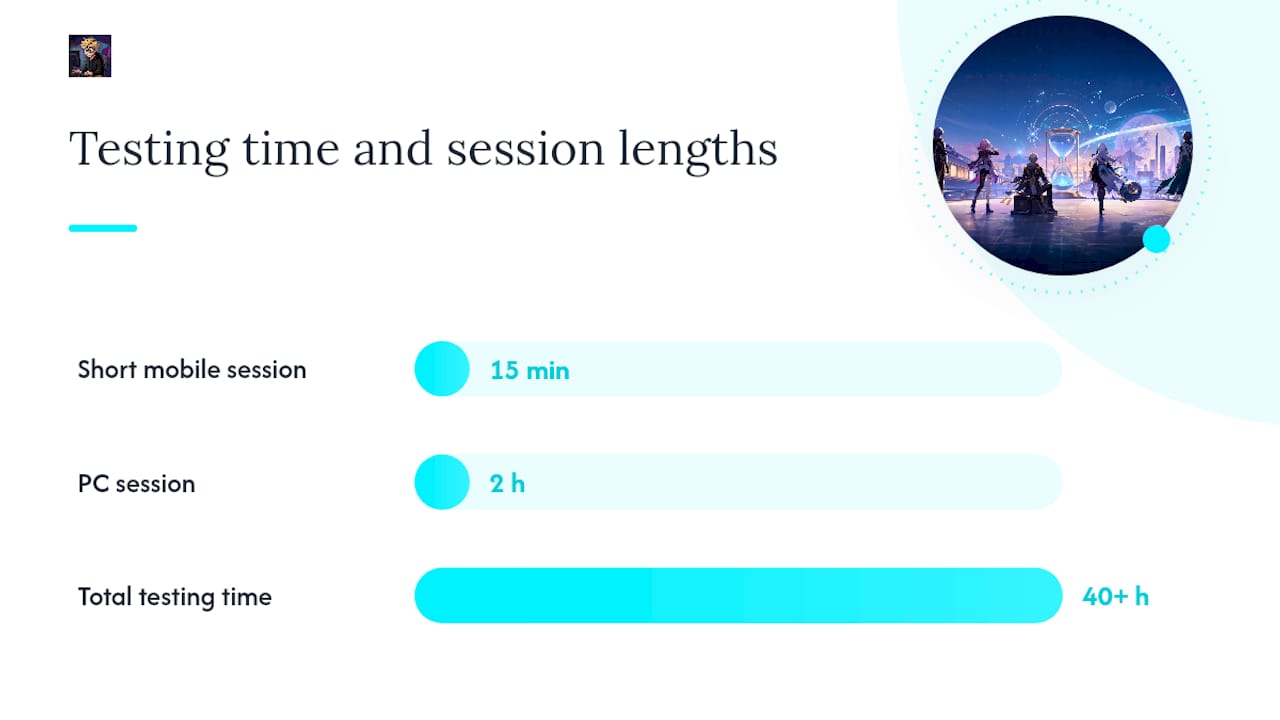
We spent over 40 hours across PC and mobile for this Honkai: Star Rail review, focusing specifically on combat pacing, early progression bottlenecks, and how the game feels during short versus long sessions. That split matters, since a lot of gacha reviews only test one platform and miss how differently the game plays on a train commute versus a weekend binge.
A few things stood out that don't show up in a quick first impression:
- The notification system gets noisy fast. Red badges pile up across nearly every menu, nudging you toward daily chores that have nothing to do with combat.
- Resource bottlenecks hit hardest around character ascension materials, not currency for pulls, which surprised us given how gacha discourse usually frames the pain points.
- Session length flexibility is real. A 15 minute mobile session and a two hour PC session both feel complete, not like a compromise.
The friction isn't in the combat. It's in the menus reminding you there's always one more chore before you get back to a fight worth having.
If you're weighing this against other free-to-play RPGs, our World of Warships beginner guide covers a similar first-week approach for a very different genre, and our Hero Wars hub breaks down progression prioritization that applies just as well here.
Final Verdict: Score and Three Takeaways
Honkai: Star Rail earns an 8.5 out of 10. Combat has real tactical depth, the story earns your attention early and keeps it, and the free-to-play structure is generous enough that spending stays optional rather than mandatory.
| Takeaway | Detail |
|---|---|
| Best for | Turn-based strategy fans and story-first players who want short or long sessions |
| Main caveat | Gacha pulls require patience; character-specific banners can pressure impulse spending |
| How to trial it | Play 5 to 10 hours through the prologue before deciding to commit long-term |
Ready to go deeper? Browse more free-to-play game guides on Jay Plays Games for team-building strategies and progression tips across other titles in the genre.
The Take From Jayplaysgames
The conventional wisdom around gacha games treats monetization as the whole story, good or bad. That misses what actually determines whether Star Rail is worth your time: whether the turn-based combat loop stays interesting once the shine wears off. It does, mostly because the Path and Element system keeps rewarding you for learning enemy patterns rather than just leveling up.
Where most reviews undersell the game is progression pacing. Early bottlenecks aren't about pulling five-star characters, they're about grinding ascension materials for the characters you already have. That's a more honest friction point than the usual "gacha bad" framing, and it's the one that'll actually determine whether you stick around past week two.
Prioritize learning the break mechanic before you worry about your roster size. A small team you understand beats a big one you don't, and that's true whether you're spending money or not.
— QuickWave
Sources
- Honkai: Star Rail Review - IGN
- Honkai: Star Rail Review | PCMag
- Review: Honkai: Star Rail is a goofy but well-oiled space adventure
- Honkai Star Rail review - GamesRadar
FAQ
Is Honkai: Star Rail a good game?
Yes. It combines tactical turn-based combat with strong character writing and substantial main story content, making it one of the stronger entries in the gacha RPG genre right now.
Is Honkai: Star Rail better than Genshin Impact?
They're different enough that "better" depends on preference: Star Rail's turn-based combat rewards tactical planning over reflexes, while Genshin's open-world exploration and real-time combat favor a different kind of player.
Does Honkai: Star Rail have LGBTQ representation?
The game includes characters with ambiguous or non-explicit orientations in its writing, but it doesn't feature confirmed LGBTQ relationships or storylines as a core focus, a common limitation across most HoYoverse titles.
How much does Honkai: Star Rail cost to play?
The base game is free to download and play, with optional purchases for the Battle Pass, monthly cards, and gacha currency; you can progress through most of the story and early content without spending anything.
How long does it take to beat the main story?
Expect a significant amount of time to finish the main story at a relaxed pace, including side quests and companion content along the way.